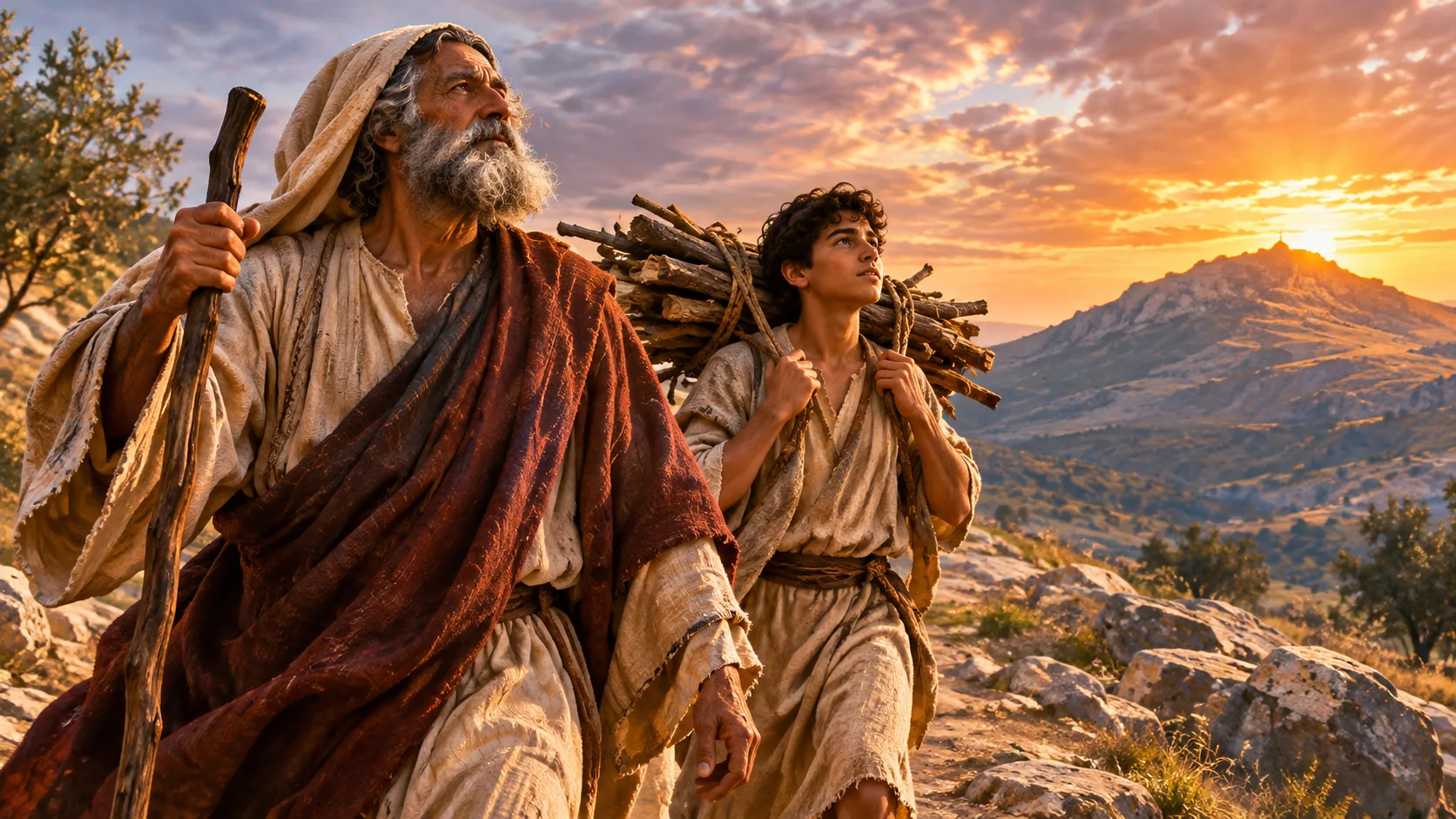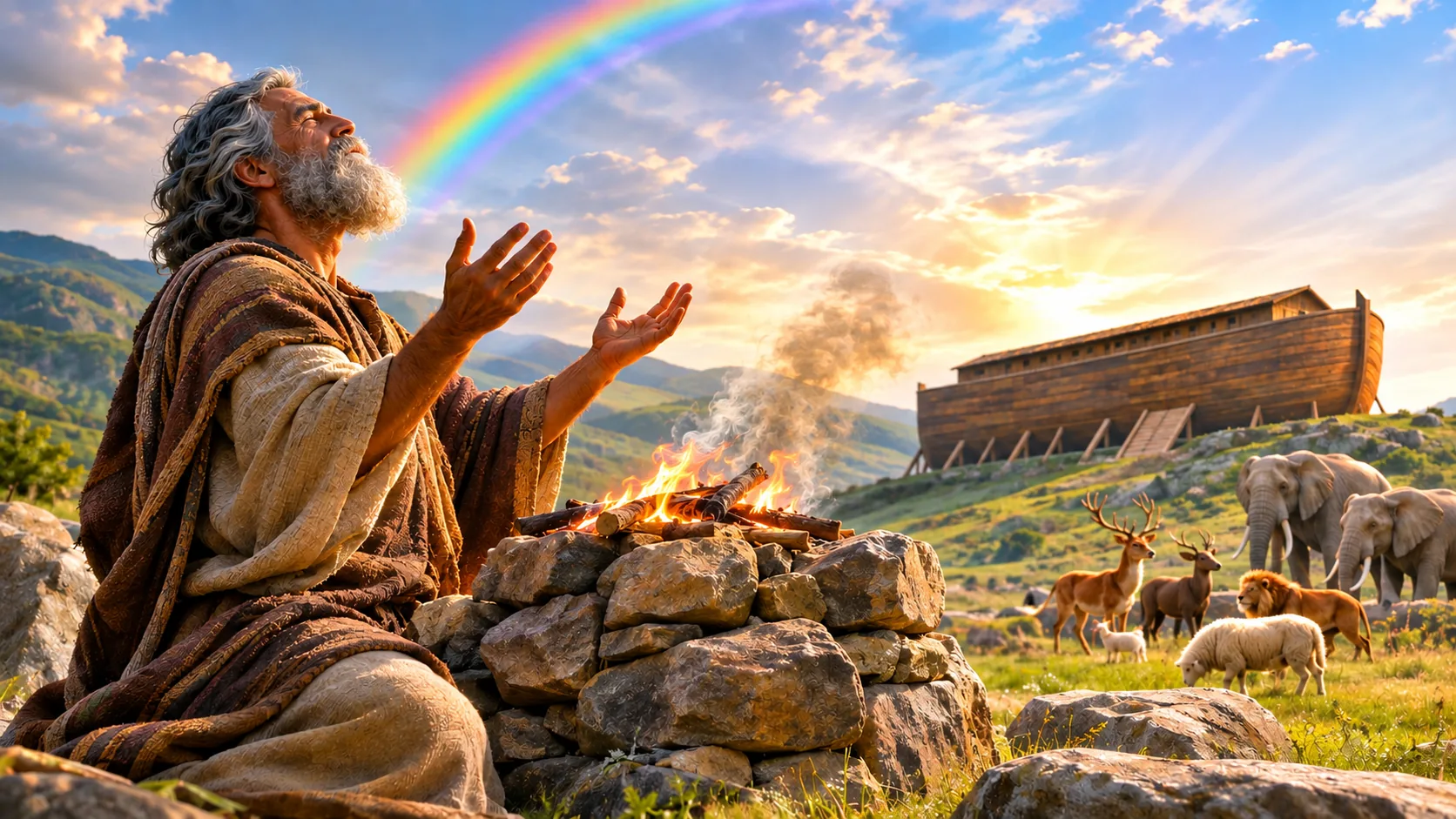


The Creator of heaven and earth appeared to a man and spoke concerning generations that were yet to be born. God was revealing His purpose and confirming His promise to Abram, and Abram responded by building an altar. What an incredible experience! The supernatural God making Himself known in the natural world, the Creator communicating with His creation, and man responding in worship.
Why did Abram build an altar? I see his altar as a response to God’s revelation. God had spoken, and Abram responded by acknowledging the One who had appeared to him. The altar marked a significant encounter between God and man. To me, it also served as a testimony to the Word Abram had received and the promise God had made concerning his future. Although Scripture does not explicitly describe this altar as a memorial, Abram’s response reminds us of the importance of valuing God’s Word and remembering His faithfulness.
There is something particularly important I want you to see here. Abram did not build an altar to make God speak. He built an altar in response to the God who had spoken. That distinction matters because sometimes we become so focused on religious activities that we forget the One to whom those activities should be directed. We may become occupied with the activities of worship without giving sufficient attention to the God we worship.
The altar was not more important than God. It was a place where Abram acknowledged the Lord who had revealed Himself. This raises a question for us today: How do you respond when God speaks to you through His Word? Do you simply move on with your day, or do you value what He has said enough to remember it, meditate upon it, and allow it to shape your decisions?
Abram Built Another Altar and Called Upon the Lord
Genesis 12:8 tells us:
“And he removed from thence unto a mountain on the east of Bethel, and pitched his tent, having Bethel on the west, and Hai on the east: and there he builded an altar unto the LORD, and called upon the name of the LORD.” Genesis 12:8 (KJV)
Notice the progression in these two verses. In Genesis 12:7, Abram built an altar where the Lord appeared to him. In Genesis 12:8, he moved to another location, pitched his tent, built another altar, and called upon the name of the Lord. This tells me something important about Abram’s relationship with God. His worship was not limited to one encounter. He continued to acknowledge the Lord as he journeyed. His location changed, but the God he worshiped did not.
I believe there is a lesson here for every believer. Your fellowship with God should not depend entirely on where you live or the circumstances surrounding you. You may move from one city to another, change jobs, relocate to another country, or experience significant changes in your personal life. But your relationship with God must remain a priority. The genuineness of your relationship with God will be tested like fathers and mothers of faith, and you will have your result because you know when you are away from the LORD.
Abram did not leave his worship behind when he moved from one location to another. He continued to call upon the name of the Lord, and we must learn to do the same.
Building an Altar Under the New Covenant
What does Abram’s example mean for us today? Under the New Covenant, we are not required to build physical stone altars as Abram did. Through Jesus Christ, we have access to the Father, and we are called to offer spiritual sacrifices acceptable to God through Him.
Hebrews 10:19-22 teaches that believers can draw near to God through Jesus Christ, while 1 Peter 2:5 describes believers as a spiritual house offering spiritual sacrifices acceptable to God through Jesus Christ. Romans 12:1 also calls us to present our bodies as living sacrifices, holy and acceptable to God.
This means our worship is not confined to a physical structure or a particular geographical location. We can cultivate consistent fellowship with God through prayer, studying His Word, worship, and obedience. When I speak about building a personal altar today, I am referring to intentionally making room for fellowship with God and maintaining a life that is surrendered to Him.
You do not have to wait until you attend a church service or join an online prayer meeting before you fellowship with God. These gatherings are good and valuable, but they should not replace your personal relationship with Him. There must be a place in your life where you personally seek His face, open His Word, meditate on what He has said, and allow the Holy Spirit to guide your decisions.
Abram’s example reminds us that fellowship with God should continue wherever life takes us.
God Moves People for His Purpose
As I continued studying Scripture, I began to notice how frequently God worked through the movement of people. Sometimes, He called people to leave familiar places. At other times, He used difficult circumstances to position them for an assignment. There were also situations where events unfolded in ways that ultimately advanced His purpose.
Consider Abram himself. God called him to leave his country and promised to make him into a great nation. Genesis 12:3 reveals that God’s purpose extended beyond Abram and his immediate family. Through him, all the families of the earth would be blessed. God was working through one man and his descendants to accomplish a purpose that would reach the nations.
But Abram was not the only person whose journey became significant in God’s plan. Throughout Scripture, we find people whose movements, whether voluntary or forced by circumstances, became part of something much greater than they could have imagined.
Joseph: From Betrayal to the Preservation of Lives
Joseph did not voluntarily relocate to Egypt in search of better opportunities. He was sold into slavery by his brothers and taken to a foreign land. His experience involved betrayal, suffering, and circumstances he did not choose. Yet years later, Joseph recognized that God had worked through those events to preserve lives during a severe famine.
Genesis 50:20 records Joseph’s understanding that although his brothers intended evil against him, God intended good through what happened. Joseph’s experience reminds us that God can bring good out of circumstances that were never part of our personal plans. It does not mean the evil done to Joseph was good, but it shows that human wickedness could not prevent God from accomplishing His purpose.
Moses: From Pharaoh’s Palace to the Deliverance of Israel
Moses’ life involved several significant transitions. As a child, he was rescued from the Nile and raised in Pharaoh’s household. Later, he fled Egypt and lived in Midian before God called him to return and lead Israel out of bondage.
When God appeared to Moses at the burning bush in Exodus 3, He revealed His intention to deliver the children of Israel from Egypt. Moses had spent years away from the place where he was born, but God called him back for an assignment that would affect an entire nation. His experience reminds us that our present circumstances do not necessarily reveal everything God intends to accomplish through our lives.
The Children of Israel: From Egypt to the Promised Land
God delivered the children of Israel from Egypt and led them through the wilderness toward the land He had promised. Their journey was not simply about changing geographical locations. It was also a period during which they had to learn to trust God, obey His instructions, and depend upon His provision.
Deuteronomy 8:2 reminds us that God used their wilderness experience to humble and test them and reveal what was in their hearts. Sometimes, the journey itself becomes an opportunity for God to develop our trust in Him.
Ruth: From Moab to Bethlehem
Ruth left Moab and followed Naomi to Bethlehem after the death of her husband. Her decision reflected remarkable loyalty and commitment. In Ruth 1:16–17, she declared that Naomi’s people would become her people and Naomi’s God would become her God.
Ruth could not have known everything that would follow her decision. Yet through her journey, she became part of the family line through which David, and ultimately Jesus Christ, would come. Matthew 1:5 records Ruth in the genealogy of Jesus. Her story reminds us that decisions made in faith and commitment can become part of something much greater than we initially understand.
Jesus: Taken to Egypt for Protection
When Herod sought to kill the young Jesus, an angel instructed Joseph to take the child and His mother to Egypt. Joseph obeyed, and the family remained there until Herod’s death, as recorded in Matthew 2:13–15.
This movement was not about seeking better economic opportunities or a more comfortable environment. It was an act of obedience in response to a warning from God. Sometimes, God’s direction may require us to respond to circumstances that demand immediate action.
The Apostles: From Jerusalem to the Nations
Before His ascension, Jesus told His disciples that they would be His witnesses in Jerusalem, Judea, Samaria, and to the ends of the earth. Acts 1:8 reveals the geographical reach of that assignment.
Later, persecution scattered believers from Jerusalem into other regions. Acts 8:1–4 tells us that those who were scattered continued preaching the Word wherever they went. What appeared to be a difficult season also became part of the spread of the gospel. God’s purpose was not limited to Jerusalem.
Paul: Taking the Gospel Beyond Familiar Territories
Paul’s ministry involved journeys across different cities and regions. He preached the gospel, established churches, strengthened believers, and carried the message of Jesus Christ to people who had not heard it.
Eventually, Paul traveled to Rome as a prisoner. Yet even there, he continued proclaiming the kingdom of God and teaching about Jesus Christ. Acts 28:30–31 records that Paul continued his ministry while living under guard in Rome. His circumstances had changed, but his commitment to the assignment God had given him remained.
When I consider these accounts together, one thing becomes clear: God’s purpose is not confined to one geographical location. He can accomplish His purposes through people who move, people who remain, and people whose circumstances change in ways they never expected.
But we must be careful not to assume that every relocation is automatically God’s instruction. Some movements result from personal decisions, others arise from difficult circumstances, and some are clearly directed by God. The important thing is to remain attentive to His Word and seek His wisdom.
Before You Say God Is Leading You, Make Sure You Have Heard Him
There is something I want to emphasize. Not every opportunity is an instruction from God. Not every open door means you should walk through it, and not every difficult situation means God wants you to leave. We must learn to distinguish between God’s leading, our personal desires, and influences that can draw us away from His will.
First John 4:1 instructs believers not to believe every spirit but to test the spirits. Proverbs 3:5–6 calls us to trust in the Lord rather than lean entirely on our own understanding, while James 1:5 encourages us to ask God for wisdom. These Scriptures remind us that discernment matters.
Before you announce that God is leading you somewhere, take time to seek Him. Examine the direction in light of His Word, pray, consider the responsibilities He has already entrusted to you, and seek wise counsel where necessary. Do not confuse impatience with divine direction.
Sometimes, God may be calling you to move. At other times, He may be calling you to remain faithful where you are. The goal is not movement for its own sake. The goal is obedience to God.
Sometimes the Journey Is Not Physical
There is another kind of movement I want us to consider. Sometimes, God is not asking you to move from one country to another. He is asking you to change the way you think.
You may remain in the same house, work at the same organization, and live in the same community, yet God may be calling you into a completely different way of living. It could involve developing a new understanding of His Word, growing in obedience, changing how you respond to people, reconsidering your priorities, or renewing your understanding of your identity in Christ.
Romans 12:2 says:
“And be not conformed to this world: but be ye transformed by the renewing of your mind, that ye may prove what is that good, and acceptable, and perfect, will of God.” — Romans 12:2 (KJV)
Notice that transformation is connected to the renewing of the mind. There are places you may never reach in your walk with God until your thinking changes. You cannot continue to interpret everything through the values of the world and expect to consistently recognize God’s will. Your understanding must be shaped by His Word.
Sometimes, the greatest distance you need to travel is not between two cities. It is between the way you currently think and the truth God has revealed in His Word. And that journey requires a willingness to surrender old ways of thinking and allow the Word of God to transform your understanding.
What Is God Asking You to Do Today?
Let me bring us back to Abram. When the Lord appeared to him in Canaan, Abram built an altar. When he moved to another location, he built another altar and called upon the name of the Lord. His journey involved movement, obedience, encounters with God, and worship. But above all, it was a journey of faith.
I believe there is something we must learn from his response. Wherever God leads you, do not neglect your fellowship with Him. Do not become so occupied with the demands of life that you forget the One who has called you.
Perhaps God is not asking you to relocate to another country. Perhaps He is asking you to change a habit, reconsider a decision, renew your thinking, or become more faithful in an assignment He has already given you.
Whatever the situation may be, the question remains: What is God asking you to do today?
Seek the Lord, examine His Word, and remain attentive to His direction. When His instruction is clear, respond in faith and obedience. Wherever He leads you, maintain your fellowship with Him. Let His Word remain your foundation, and let your life become a testimony of obedience to the God who calls, leads, and fulfills His promises.
Prayer
Dear Heavenly Father,
Thank You for Your Word and for the lessons You have revealed through the life of Abraham. Thank You for showing me the importance of responding to Your Word and maintaining fellowship with You wherever life takes me.
Father, help me to value Your Word and remain faithful to what You have spoken. Teach me to recognize Your direction and distinguish Your leading from my personal desires.
Dear Holy Spirit, renew my mind through the Word of God. Where my understanding needs to change, teach me Your ways. Where I have become distracted, draw my attention back to what matters most.
Help me to maintain consistent fellowship with You through prayer, worship, meditation on Your Word, and obedience. Whether You are calling me to move or remain where I am, may my life bring glory to Jesus Christ.
May I never become so occupied with the journey that I neglect the One who is leading me.
In Jesus’ name, Amen.