

Sometimes, we become so comfortable with where we are that we stop asking whether we have arrived at the place God intended for us. The job is good, the business is doing well, the children are in good schools, and the neighborhood is safe. The benefits are attractive, and life seems to be working in our favor. What else could we possibly want?
But what if all these things are available in a place that was never meant to be your final destination? What if you have settled in Haran when God is calling you to Canaan?
This question came to mind while I was studying the journey of Terah and Abram in Genesis 11 and 12. The more I considered their experiences, the more I began to understand something important about God’s purpose, our desire for comfort, and our willingness to obey Him even when His direction requires us to leave what we have become accustomed to.
A Journey That Ended Before the Destination
Genesis 11:31 tells us:
“And Terah took Abram his son, and Lot the son of Haran his son’s son, and Sarai his daughter in law, his son Abram’s wife; and they went forth with them from Ur of the Chaldees, to go into the land of Canaan; and they came unto Haran, and dwelt there.” Genesis 11:31 (KJV)
Something in this verse caught my attention. Terah and his family left Ur of the Chaldees with a destination in mind. They were going to Canaan, but they did not reach Canaan. Instead, they arrived in Haran and settled there.
Scripture does not tell us why Terah stopped in Haran. It does not explain what influenced his decision or whether he intended to continue the journey later. However, I find the contrast between their intended destination and where they eventually settled worth considering. They set out for Canaan, but they settled in Haran. Why?
Could it have been the opportunities available in Haran? Perhaps the business environment was attractive, the land was fertile, trade was thriving, and the community offered the kind of stability the family desired. We do not know, but imagine Haran had everything we look for today: good roads, booming businesses, a strong economy, excellent schools, no state income tax, attractive employment packages, health insurance, and robust retirement benefits.
Would you have continued the journey, or would you have settled there?
I understand the desire for comfort. We all want a good life for ourselves and our families. We want security, stability, and opportunities to prosper. There is nothing wrong with these things. But what happens when our desire for comfort becomes more important than God’s purpose for our lives?
At what point does a good opportunity become a distraction from what God has called us to do?
I am not suggesting that Terah disobeyed God by settling in Haran. Scripture does not establish that. Rather, his journey raises a question worth examining in our own lives: Are we willing to continue following God’s direction when remaining where we are seems more comfortable?
When God Calls You to Leave What Is Familiar
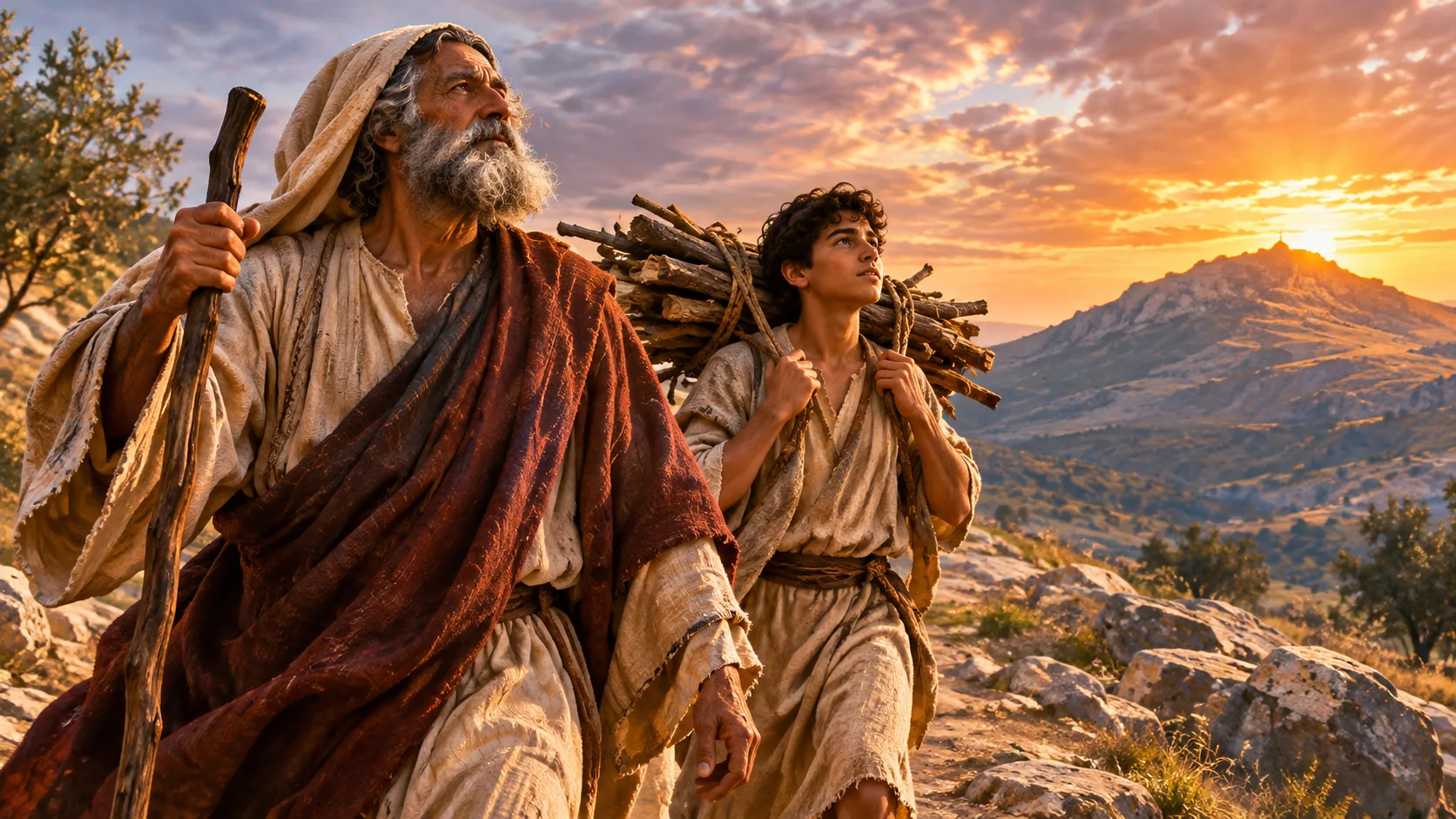
Genesis 12:1-3 introduces God’s instruction and promise to Abram. The Lord told him to leave his country, his relatives, and his father’s household for a land that He would show him. God also promised to make Abram into a great nation, bless him, make his name great, and make him a blessing to others. Consider what God was asking Abram to do. He was to leave the familiar environment where he had established relationships, acquired possessions, and built a life. He was being called to step away from what he knew and move toward a place God would show him. That was not a small instruction. It required faith, trust, and a willingness to surrender the security that comes from knowing what tomorrow might look like.
Hebrews 11:8 explains Abraham’s response:
“By faith Abraham, when he was called to go out into a place which he should after receive for an inheritance, obeyed; and he went out, not knowing whither he went.” — Hebrews 11:8 (KJV)
Abraham obeyed even though he did not know every detail of the journey ahead. He knew the One who had called him, and that was enough for him to begin moving. Sometimes, we want God to explain everything before we take the first step. Where exactly am I going? How long will the journey take? What opportunities will be available? What will happen to my family? How will everything work out?
These are reasonable questions, especially when our decisions affect other people. But there are times when God gives us sufficient direction to obey without revealing every detail of what lies ahead. And this is where faith becomes necessary.
Faith does not require us to know everything about the journey. It requires us to trust the One who is leading us.
This does not mean we should make careless decisions or ignore the responsibilities God has entrusted to us. Rather, it means that our need for complete certainty should not become an excuse for refusing to obey an instruction we have clearly received from Him.
What Did Abram Take With Him?
Genesis 12:5 says:
“And Abram took Sarai his wife, and Lot his brother’s son, and all their substance that they had gathered, and the souls that they had gotten in Haran; and they went forth to go into the land of Canaan; and into the land of Canaan they came.” Genesis 12:5 (KJV)
Something else in this verse caught my attention. Scripture specifically mentions the possessions and people they had acquired in Haran. This tells us that Haran was not simply a place they passed through without establishing anything. They had acquired possessions, developed a household, and taken on responsibilities. The very things that stopped his father from reaching his destiny now confronts Abram. Let me declare over you: Whatever stopped your father will not be able to stand before you in Jesus name! Amen.
I wonder how much effort it took to relocate everything. Moving a family today can be difficult, even with modern transportation, professional moving companies, and access to information. Now consider Abram’s journey. He was not traveling with a small bag. He was moving with his wife, Lot, their possessions, and the people who belonged to his household. Yet he went. The things he had acquired in Haran did not prevent him from continuing to Canaan.
This raises an important question: Have the things you have acquired where you are become reasons you can no longer obey God’s direction?
Sometimes, the more we acquire, the more difficult it becomes to move. Not necessarily because God has stopped leading us, but because we have become attached to what we have built. And I am not speaking only about physical possessions. It could be a position, a reputation, a relationship, a business, a familiar way of thinking, or even an opportunity that once represented God’s provision in your life.
The question is not whether these things are good. The question is whether we are willing to follow God when His direction requires us to leave them behind.
There is something else worth considering. The possessions Abram acquired in Haran were not necessarily a hindrance to his journey. He took them with him. This reminds us that following God’s direction does not always mean abandoning everything we have acquired. Sometimes, God may use what we have gained in one season to prepare us for the next.
What matters is that we do not allow those things to become more important than obedience to Him.
Moving From Nigeria to the United States: The Cost of Relocation
I understand, at least in part, what it means to leave a familiar environment and begin life somewhere else. When my family moved from Nigeria to the United States, there were many things to consider. Even something as simple as luggage became an issue. I remember that one of our bags was going to be removed unless we paid an additional fee. Imagine the financial strain on a young family like ours. You are already preparing to leave one country for another, and now you have to decide whether to pay extra to keep some of the things you consider important. And luggage was only one part of the experience. There were changes in food, weather, climate, culture, and the way things worked. So much was different from what we had known.
Relocating is not simply about moving your body from one geographical location to another. It often involves leaving behind things you have known for years and learning how to live in a completely different environment. There are emotional, financial, physical, and social demands. When you are moving with a family, the decisions become even more significant because they affect everyone involved.
Now imagine Abram making that journey thousands of years ago. There were no airplanes, moving trucks, or navigation applications. He could not conveniently research every detail of the destination, including where his family might rest along the way or what conditions they would encounter.
Yet he obeyed.
For me, this is a reminder that following God’s direction may require us to accept changes that are not always comfortable. There may be things we have to learn, adjustments we have to make, and conveniences we may have to leave behind. But if God is truly leading us, then our confidence must rest in Him rather than in the familiarity of our surroundings.
When Abram Arrived in Canaan, God Appeared to Him
Genesis 12:7 tells us:
“And the LORD appeared unto Abram, and said, Unto thy seed will I give this land: and there builded he an altar unto the LORD, who appeared unto him.” Genesis 12:7 (KJV)
Consider the significance of this moment. Abram had traveled from Haran to Canaan, and when he arrived, the Lord appeared to him. God spoke concerning the land and promised to give it to Abram’s offspring. This is God saying, I meant everything I told you before… I am watching over my word to perform it.
Abram had obeyed the instruction to leave, undertaken the journey, and arrived in the land. Now God was confirming His promise. The passage does not tell us whether God spoke to Abram at other points during the journey. But it shows us that Abram continued in obedience to the direction he had received. Sometimes, after receiving an instruction from God, we want Him to repeat the same instruction every day. We want another confirmation, another sign, or another assurance that we are doing the right thing. But there is something to learn from Abram’s obedience. When God has made His direction clear, we must learn to remain faithful to what He has said. That does not mean refusing further guidance or acting without wisdom. It means that we should not abandon an instruction simply because the journey has become difficult.
Psalm 119:105 says:
“Thy word is a lamp unto my feet, and a light unto my path.” Psalm 119:105 (KJV)
Sometimes, the light God gives is sufficient for the next step, even when we cannot see the entire road ahead.
And when Abram arrived in Canaan, he did something remarkable. He built an altar to the Lord who had appeared to him. His response was not merely to celebrate reaching the destination, but to acknowledge the God who had called him.
The destination should never become more important than the One who leads us there.
Have You Settled Before Reaching Your Destination?
As I reflect on the journey of Terah and Abram, I am reminded that comfort and obedience are not always the same thing. A place can offer security, opportunity, and prosperity without necessarily being the place where God wants us to remain. But we must also be careful. Not every desire to move is an instruction from God, and not every season of stability means we have become spiritually complacent. Sometimes, God calls us to remain faithful where we are. At other times, He calls us to step into something unfamiliar.
The important thing is to know His direction and respond in faith. Perhaps your Haran is not a physical location. It may be a familiar position you are afraid to leave, an opportunity you have become too attached to, or a way of living that no longer reflects what God is asking of you.
Is there something you know God has instructed you to do, but you keep postponing it? Have you become so comfortable where you are that you no longer seek His direction? Are you allowing the things you have acquired to determine whether you will obey Him?
I want you to consider these questions carefully.
Do not allow comfort to become more important than obedience, and do not mistake material success for the fulfillment of God’s purpose.
Seek the Lord, listen to His Word, and when His direction is clear, respond in faith. Wherever He leads you, remember that the most important thing is not simply arriving at a destination but remaining faithful to Him along the way.
Prayer
Dear Heavenly Father,
Thank You for Your Word and for the lessons You have revealed through the life of Abraham. Father, I ask You to examine my heart and reveal any area where I have allowed comfort, possessions, opportunities, or personal desires to become more important than Your purpose for my life.
Help me not to settle where You are calling me to move, and not to move when You are asking me to remain faithful. Give me wisdom to recognize Your direction and the courage to obey Your Word, even when I do not understand every detail of the journey ahead.
Dear Holy Spirit, help me to remain sensitive to Your leading. Where I have become fearful, strengthen my faith. Where I have delayed obedience, help me to respond to Your instruction.
May my life be a testimony of faith and obedience, and may everything I do bring glory to Jesus Christ.
In Jesus’ name, Amen.